FactoStack Manufacturing Platform
The core product behind FactoStack: a product engineering effort focused on Indian MSME manufacturers who need production, inventory, procurement, GST, and owner visibility in one operating system.
Role
Design and engineering
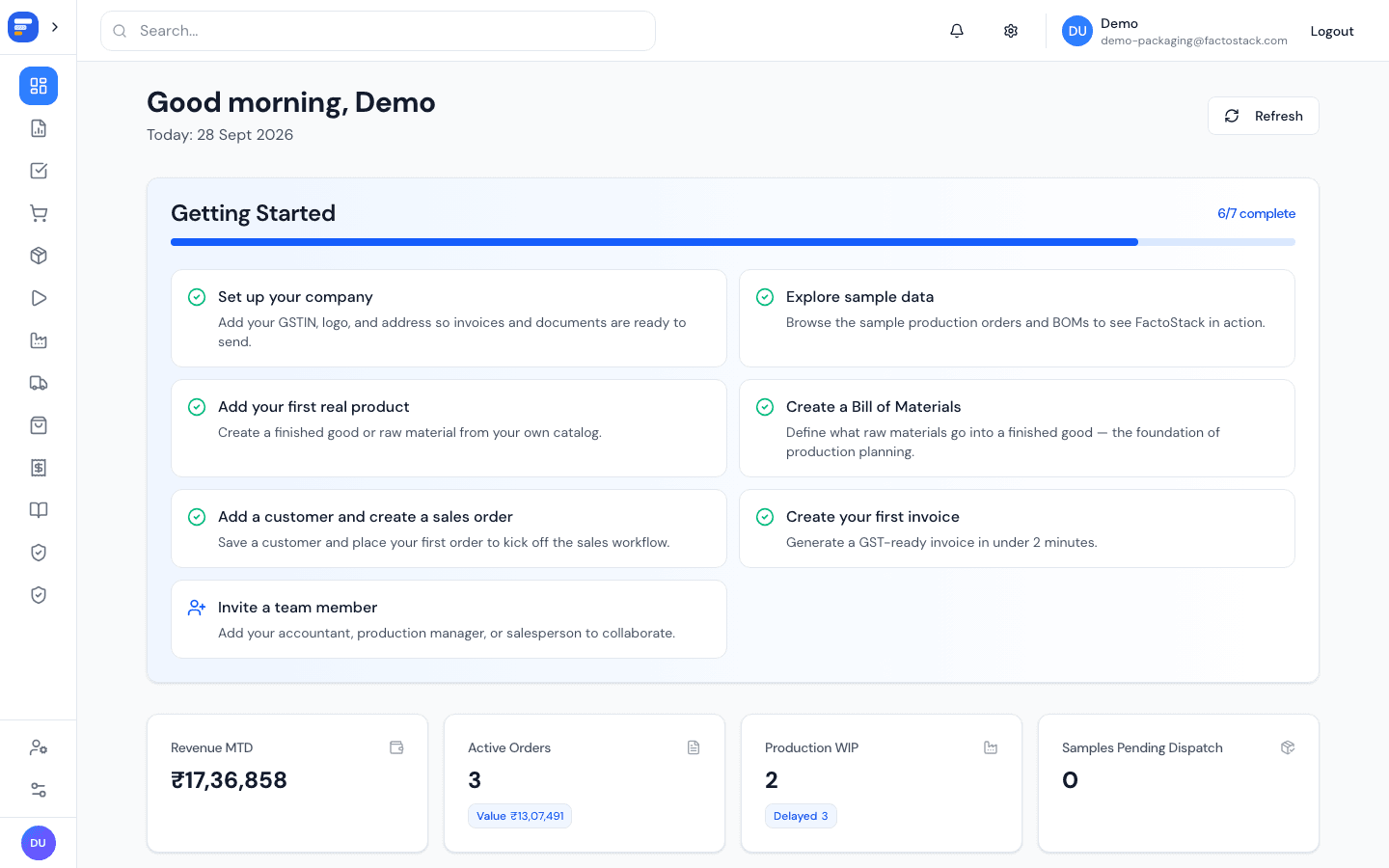
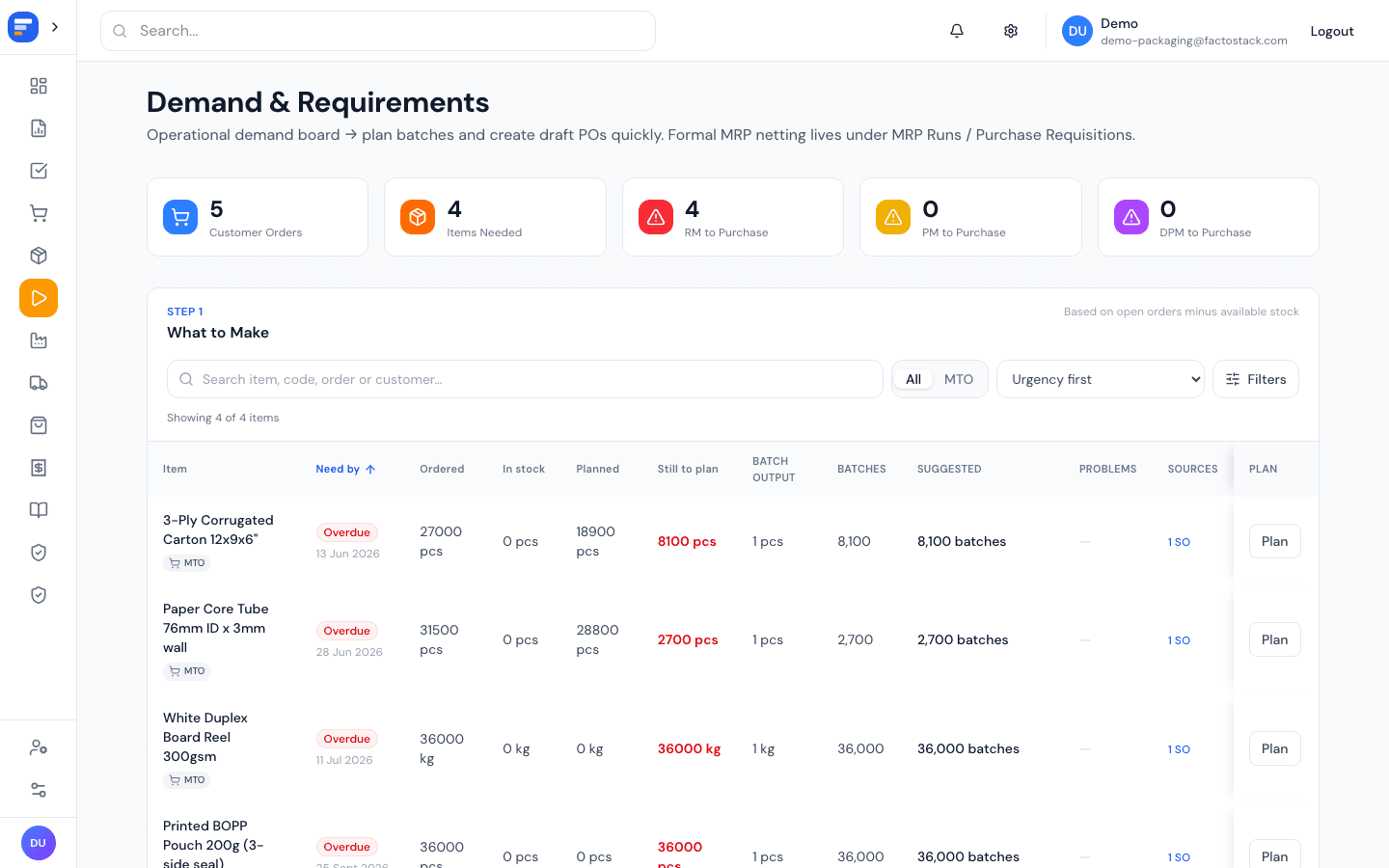
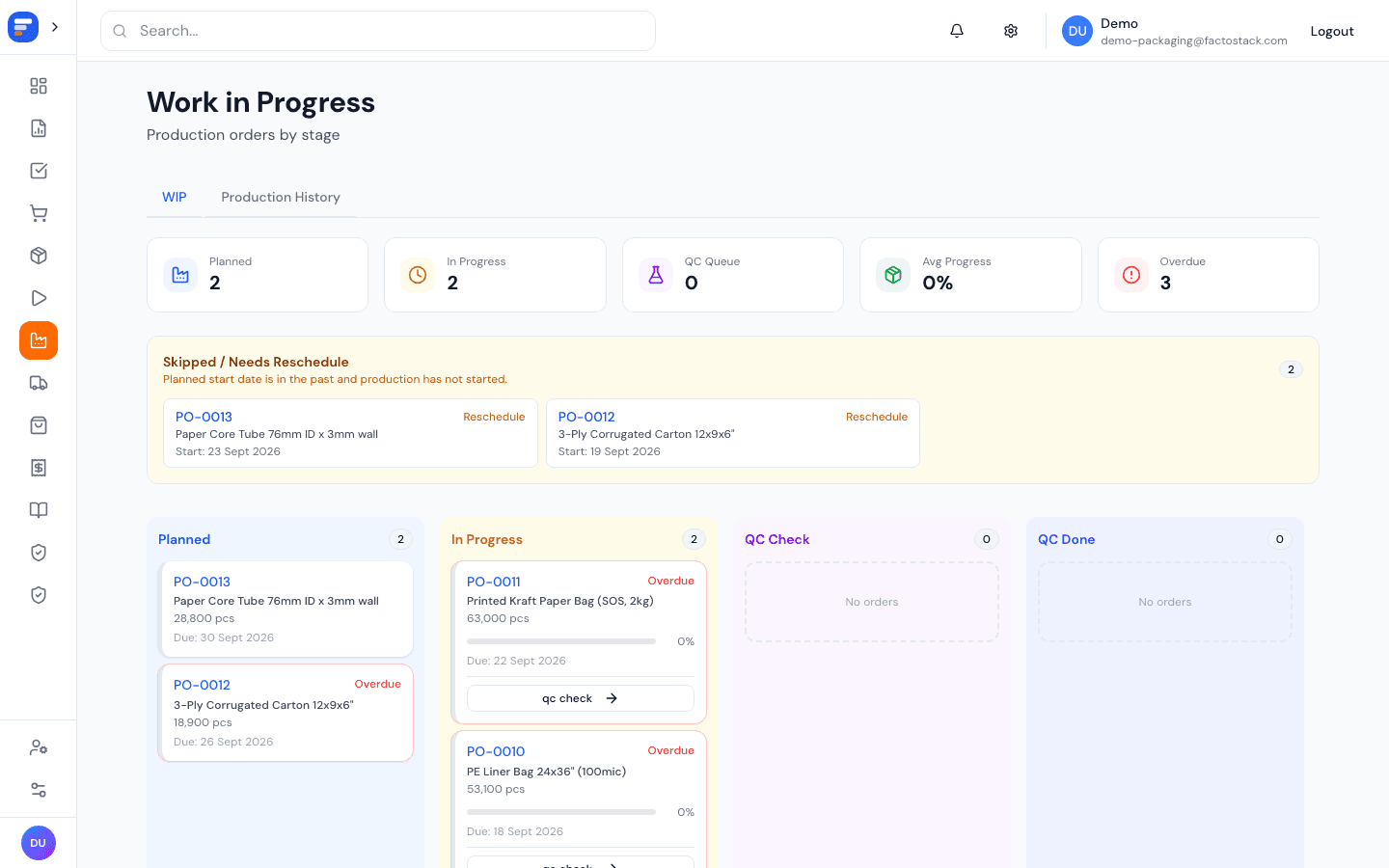
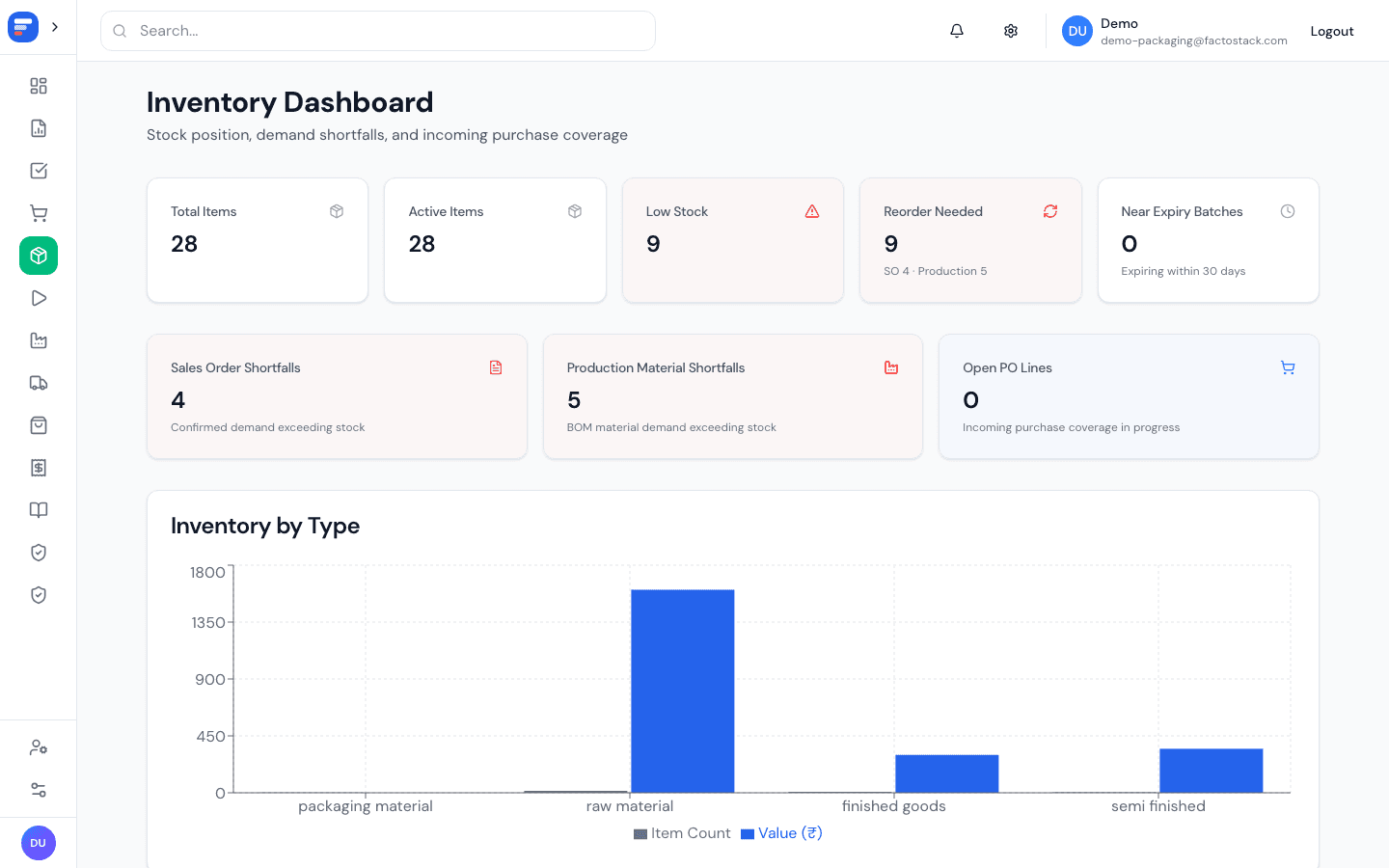
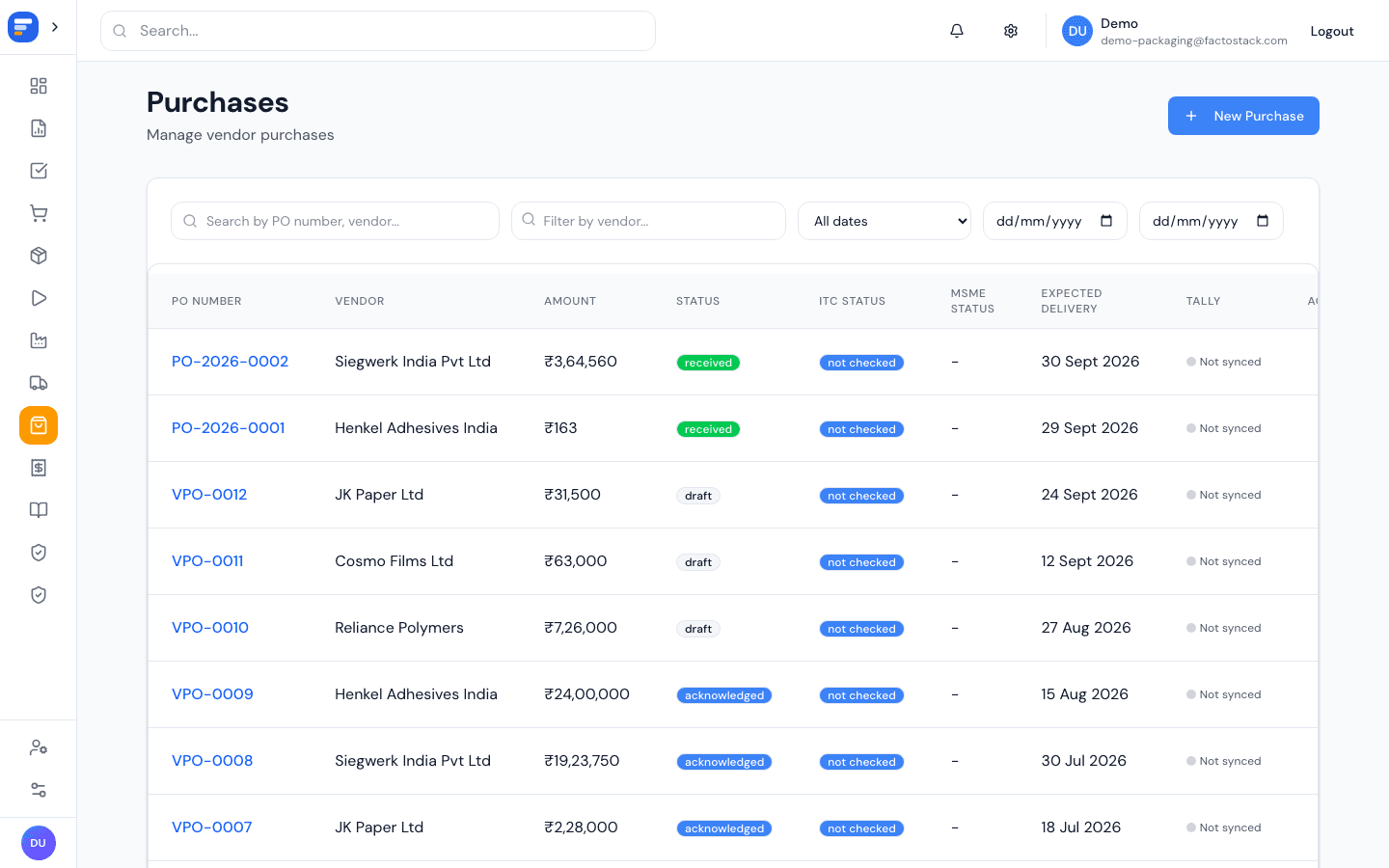
Inside FactoStack · 01 / 05
One owner view for revenue, active orders, production status, and operational alerts.
Tech Stack
 React
React TypeScript
 TanStack Router
 NestJS
 PostgreSQL
 Amazon Lightsail InstanceAmazon Lightsail DBAmazon Lightsail Storage
 Docker
 AWS ECR
React + TypeScript client with TanStack Router and React Query, NestJS + TypeORM backend for operational and compliance workflows, deployed on Amazon Lightsail with Docker images shipped through AWS ECR.
The Problem
Indian MSMEs often run core factory work across Excel sheets, WhatsApp messages, paper slips, and separate accounting tools. In the platform repo, that pain shows up in the workflows I chose to build: WIP tracking, QR job cards, material variance, MSME payment compliance, ITC verification, receivables aging, GST exports, and owner dashboards.
The Solution
I turned those operational gaps into a tenant-aware product. FactoStack brings together quotes, orders, stock, procurement, production, invoicing, finance, and compliance dashboards so owners and operators can work from the same system instead of stitching status together manually.
Core Modules
- Sales workflows for quotes, customers, sales orders, and quote uploads inside the same operating system.
- Inventory workflows for items, stock, warehouses, batches, transactions, and scrap so factory teams can track material movement in one place.
- Production workflows for BOMs, production orders, WIP tracking, job cards, QR scanning, and material variance reporting.
- Finance workflows for invoices, payments, receivables aging, profit and loss, GSTR-1 export, and GST-aware reporting.
- Procurement workflows for vendors, purchase orders, ITC verification, and MSME 45-day payment tracking.
- Tenant-aware onboarding, feature flags, executive dashboards, and role-based views that let the same product fit different factory setups.
Implementation Highlights
Built around real MSME constraints
Operator and owner workflows in one app
Tenant-aware product foundation
AI-Assisted Engineering
 Claude Code
 Codex
CodexI used Claude Code and Codex as AI-assisted engineering tools while building the platform. They helped me move faster on repetitive implementation work, route scaffolding, refactors, and edge-case exploration across modules, while product decisions, tradeoffs, and final code review stayed with me.
Current Product Status
- 1.The product is still early-stage, so I describe it as a platform in validation rather than claiming scaled business impact that does not exist yet.
- 2.Mapped six factory workflow domains into one product without copying generic ERP patterns. The scope came from real constraints: GST exports, MSME payment deadlines, ITC tracking, receivables aging.
- 3.Built a tenant-aware architecture so different factory configurations can onboard without rebuilding core flows.
- 4.Validated that Indian MSME compliance requirements need product-level design decisions, not just UI implementation.
Contact
Interested in working together?
I take on selected consulting and freelance work: full-stack builds, ERP and SaaS implementation, technical SEO, and operations-heavy products. I’m also open to conversations about FactoStack or forward-deployed engineering work.