FactoStack Marketing Website
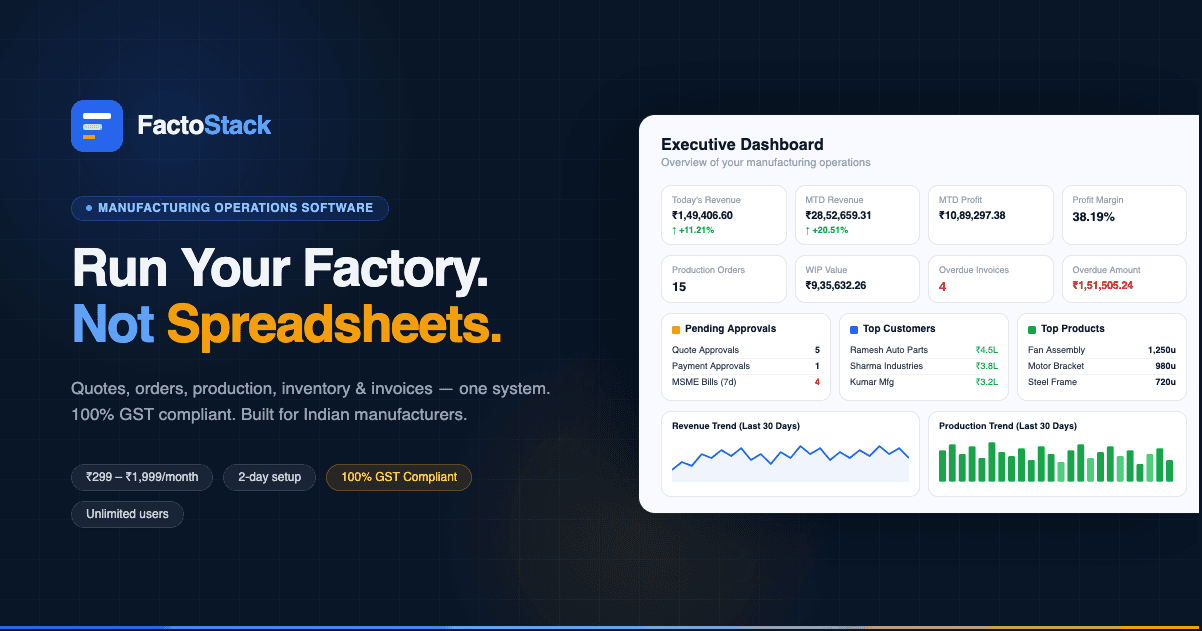
The acquisition site for FactoStack, built as the marketing and SEO engine for a complex manufacturing product with search, tools, content, and conversion paths working together.
Role
Design and engineering
Tech Stack
 NextJS
 TypeScript
 TailwindCSS
 React
ReactThe Problem
FactoStack is a broad product, so a five-page brochure site would not be enough. The website had to explain the product clearly, capture search intent across multiple modules and industries, and move visitors into trial, demo, or WhatsApp conversations.
The Solution
I built the website as a marketing system: homepage positioning for Indian MSMEs, module and solution pages, comparison pages, free tools, blog routes, structured SEO, and analytics-backed handoffs into the live app and sales flows.
What The Site Covers
- Homepage messaging for Indian manufacturers with direct paths into free trial, demo booking, and WhatsApp conversations.
- Feature and solution pages for CRM, inventory, production, procurement, quality, and manufacturing-MSME use cases.
- Comparison pages such as vs Odoo, vs ERPNext, vs Tally, and vs Vyapar to target bottom-funnel search intent.
- Free acquisition tools including invoice generation, quote generation, production cost calculation, and project calculators.
- Blog and MDX publishing with route discovery in the sitemap and page-level metadata for content expansion.
- Canonical metadata, Open Graph, breadcrumb/software schema, and conversion tracking wired into a reusable marketing system.
Implementation Highlights
Search-surface architecture, not a brochure site
The repo is structured around a broad acquisition surface: homepage, feature pages, solution pages, comparison routes, blog pages, and free tools. It is built to earn different kinds of intent instead of depending on a single homepage funnel.
SEO foundations built into the app layer
The marketing site has reusable metadata helpers, canonical URLs, Open Graph tags, JSON-LD helpers for breadcrumbs, blog posts, and software pages, plus an autogenerated sitemap that includes app routes and blog content.
Measured conversion paths
The site is not just content. Trial, demo, WhatsApp, quote flow, and calculator interactions are instrumented so the acquisition work can be measured, not guessed.
AI-Assisted Engineering
 Claude Code
 Codex
CodexI also used Claude Code and Codex as AI-assisted engineering tools on the website. They helped speed up page implementation, metadata and schema patterns, iterative copy updates, and repetitive frontend work, while I kept the positioning, SEO direction, and final editorial judgment grounded in the product itself.
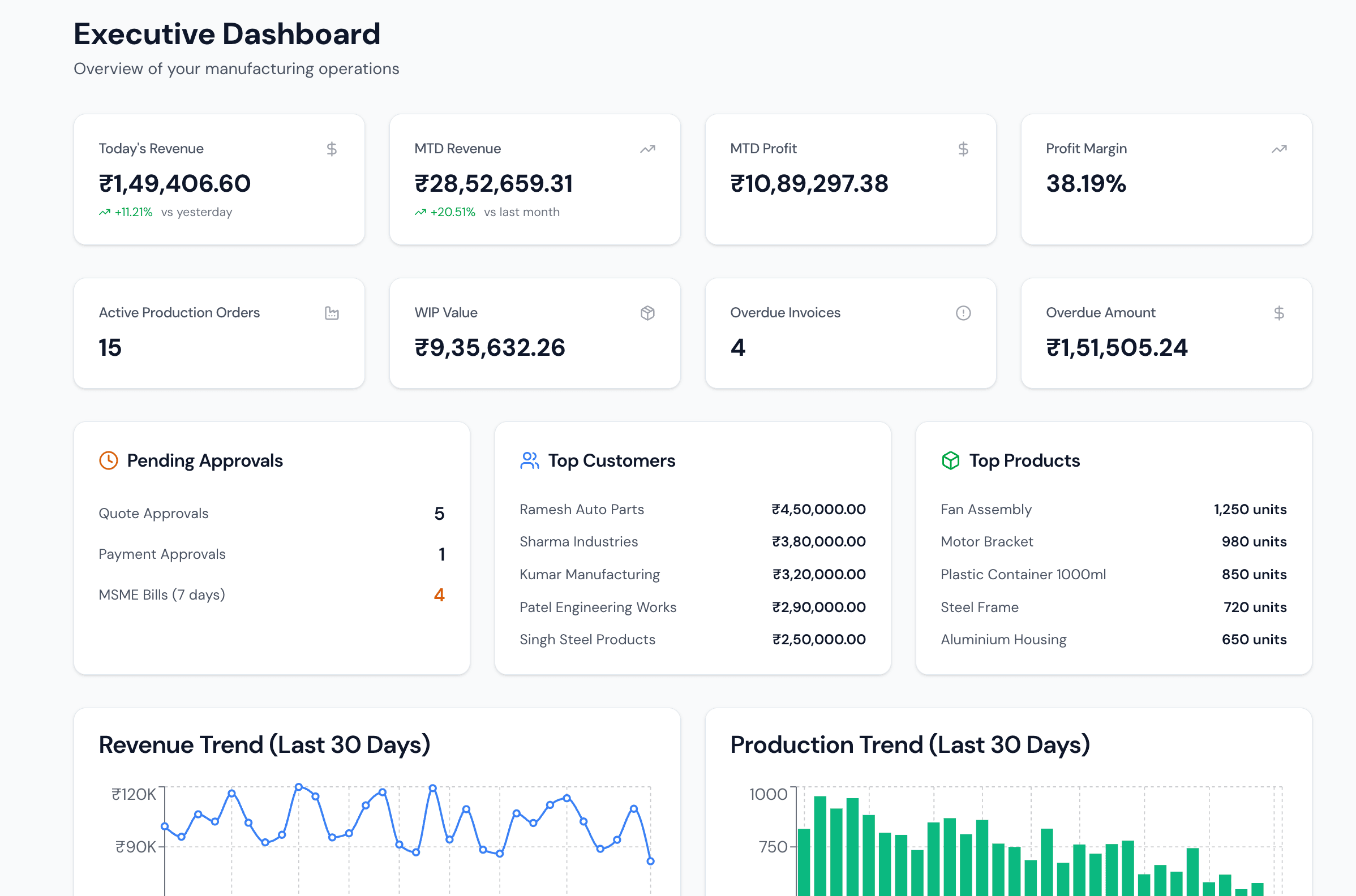
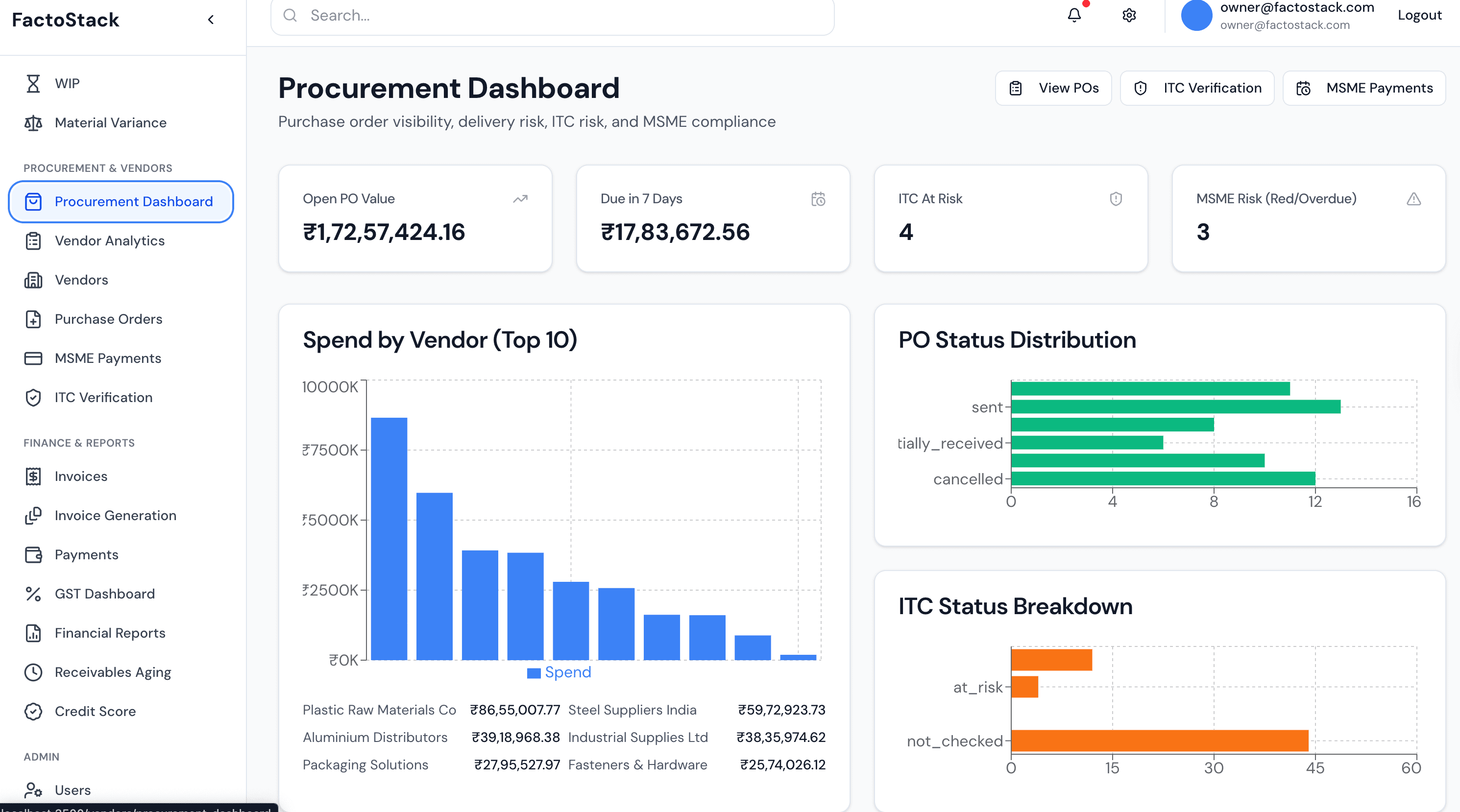
Selected Screens
Results & Impact
Turned FactoStack.com into the marketing layer for the product, not a separate brand site with generic copy.
Created reusable SEO and content primitives that support feature pages, industry pages, comparisons, blog posts, and tools from one codebase.
Connected product storytelling directly to trial, demo, and WhatsApp handoffs into the live platform.
Built a system that can keep expanding with new pages and tools without rewriting metadata, schema, or tracking each time.
Contact
Interested in working together?
I take on selected consulting and freelance work: full-stack builds, ERP and SaaS implementation, technical SEO, and operations-heavy products. I’m also open to conversations about FactoStack or forward-deployed engineering work.